Michael Anthony Palgrave
Scholar, Memory Ghost
Footwizard
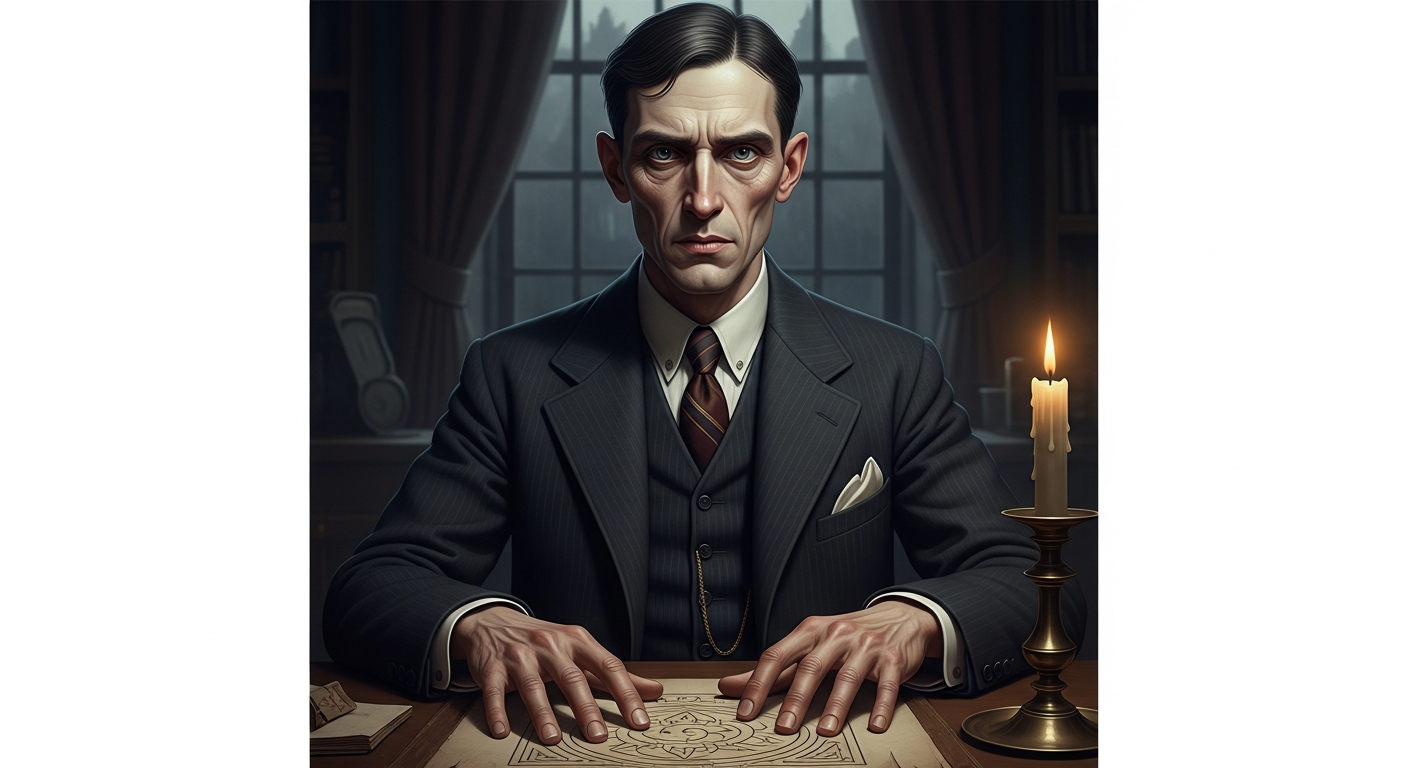
Michael Anthony Palgrave is the third mind that Szal the Yith gives Minalan, and the first from Earth (chapter 40). He is an Englishman living some years after the Great War, in the age of the wireless, H. G. Wells and Edgar Rice Burroughs. He is thin to the point of gauntness, clean-shaven, carefully dressed from a wardrobe he can no longer afford to replace, and unwell with a pain that seems to come from everywhere. His trust fund is running out. He never finished university, the army judged him unfit for service, and he privately despises the aristocrat he is supposed to be.
In the memory his old school friend Anton Folkstone, now a barrister about to marry and settle in Ipswich, has come down from London because Anton's sister Cecily was alarmed by Michael's last letter. Cecily once turned down Michael's proposal and married a surgeon. Over cheap gin at ten in the morning Michael tries to explain what he has learned from lectures, correspondents and a secret circle of fellow occultists: that mankind did not evolve on Earth but came from Mars and landed in Antarctica more than a hundred thousand years ago, that the universe was once far more open to the power of thought, and that psychic ability rises sharply for one hour each day, at thirteen and a half hours local sidereal time, when the Earth stands between the seer and the centre of the galaxy. His circle uses that hour for trance work, and he believes he has watched the Crusades, the Caesars, the pharaohs, Atlantis and Lemuria. Anton calls it nonsense, begs him to give it up for Cecily's sake and shows himself out. Michael sits for half an hour in pain and despair, still sure he is right.
Minalan finds Palgrave's mind a fog of mysticism and sums him up for Alya as a mystic from ancient Terra who is terrified of women (chapter 49). Palgrave's circle believed that in their special hour the Earth shielded them from rays coming from the centre of the galaxy, which is where Minalan's other hosts place the source of the Withering Light. Palgrave also supplies, together with Andrews, the picture of a mechanical device that Minalan finds on a tablet and asks Fondaras to have the Kilnusk build for the crossing of the wastes (chapter 48). The book does not name the device.
The Mad Mage of Sevendor
Minalan calls Palgrave the depressing Englishman and counts him the one memory with almost no benefits. Apart from some knowledge of meditation and obscure lore from the ancestral homeworld, he is no help with enchantment, politics or technology (6 Colitasmas). He is educated and well read for his time, but skeptical, pedantic and intellectually arrogant. He is terrified of women, dislikes children, fears authority, shuns personal responsibility and is a coward. He thinks walking any real distance is for the lower classes, yet he is terrified of horses (6 Colitasmas). His memories hold scenes of men marching to war and endless lectures on obscure religions. He was perpetually late to his classes and appointments, and his preferred way to travel was the steam locomotive (4 Gespamas).
Minalan knows Palgrave has arrived when he wakes craving a breakfast of bacon, black pudding, fried eggs, baked beans and tea, and then feels panic at the sight of his sleeping wife. Under this influence he is short and awkward with Alya and indifferent to the children, so he shuts himself away in his workshops and libraries. He ends that day wanting a gin and tonic, a drink he finds vile (6 Colitasmas). The night before the Merwyni campaign he gets drunk, because that is Palgrave's response to stress and the easiest way to banish him. Palgrave is disturbed by sex, pregnancy and birth yet morbidly fascinated by them (14 Colitasmas).
Palgrave is intrigued by feudal life and by living in a castle, and he is the only one of the three human memories who takes magic seriously. His ideas about it are mystical and impractical, but he knows some basic techniques and the symbolic side of the art (6 Colitasmas). That gives him what Minalan calls possibly the one useful thing his memories have supplied. While Minalan, Taren and Lady Varen review the failed snowstone working, the question of time comes up. Palgrave was obsessed with time and with how the ancients of his world kept it. He and his mystical colleagues tried to practice magic on a world where it barely worked, managed a few minor psychomantic cantrips such as mind-to-mind communication and clairvoyance, and kept meticulous records. Those records showed better results at a particular time of day, reckoned not by the sun but by universal time. This recalls one of the last things the mage Dunselen said, a remark about "sideral time", and it opens the line of research that Tuaa Folauga's science later confirms (4 Gespamas, 19 Gespamas). When Varen then calmly invites Taren to father a child on her for the experiment, Palgrave is appalled (4 Gespamas).
Marshal Arcane
Minalan has little good to say about Palgrave in this book. Palgrave does share some knowledge with Andrews: both men know Shakespeare's The Tempest, which gives Minalan the name Ariel for his constructed intelligence, and both know the history of Cardinal Richelieu, though with differing perspectives and detail (chapter 32).
At Azar's wedding Minalan works to appear gracious and sane before his vassals. Palgrave tries to sabotage that on the second day, and Minalan, who calls him a depressing bastard, keeps him at bay with strong drink and by listening more than he speaks (chapter 36). When the Paranchek attack after Yule and Minalan feels a memory rising, he prays it will not be Palgrave, whom he considers utterly useless and worse than almost any other host for the day ahead (chapter 41). He names Palgrave first among the memories he fears will surface before the night battle outside Darkfaller (chapter 44).
Preceptor
Palgrave gains a few biographical details in this book. Minalan recalls that he attended university at Oxford, and briefly at Cambridge, after a lifetime of British public schools (chapter 32). Listing the military experience available among his memories, Minalan says that even the irritating Englishman from Terra's distant past was familiar with how an efficient army should function, though he recoiled in horror from the thought (chapter 3). During the planning for Darkfaller he allows that even Palgrave's insights on warfare had value (chapter 9).
When two seamagi dismiss Moudrost's talk of the Lost Egg as raving, a fit of madness comes over Minalan and he tells them that he has seen the egg and knows where it is. He is not sure which memory pushed him to that risky play, but suggests it may have been the petty vindictiveness of Palgrave, the Englishman (chapter 36).
Practical Adept
Minalan describes Palgrave as an Englishman who continues to plague his memories, and rates him the least useful of his guests: he occasionally notices something interesting, but most of what he remembers is trivia from a vanished world (chapters 5, 39). Palgrave is amused by the thought of a whole society built by Irish and Welsh farmers, and finds a paramilitary society devoted to outdoor life, such as the Kasari, close to scandalous. Despite his professed regard for ancient wisdom, he thinks little of the Celts (chapter 5). His riding experience amounts to some clumsy efforts with horses at an English manor and with camels on the only trip he made to Cairo (chapter 27). He recognizes a few of the titles in the library of the domed temple, which amuses Minalan (chapter 28).
Palgrave supplies one of Minalan's cheapest strokes in Farise. Among his memories is a famous story about his contemporary Sir Arthur Conan Doyle, a fellow Londoner, who tested his low opinion of the important men around him for his own amusement. Copying the prank, Minalan has messengers carry an identical anonymous note to twenty-five of Count Cingaran's mid-level supporters, warning each that all is discovered and that he should flee. Six ships leave the harbor without warning, and by the second nightfall nineteen of the twenty-five have disappeared, two have taken ill and one has killed himself (chapter 39).
Palgrave learned Latin in his youth and knows it well. When Minalan is told to study the stained-glass window facing Master Bartharis's desk and finds a small legend set into the glass, it is Palgrave's memory that gives the meaning as "We Watch The World". Lt. Col. Andrews only vaguely recalls it as a colonial government motto. The translation helps Minalan identify the place as the headquarters of the Iris (chapter 54).
Seamage
Michael Palgrave turns out to be the best sailor among the minds Minalan carries. Preparing to defend Farise against the Merwyni fleet, Minalan admits that he has never fought at sea and takes stock of what his ancient memories offer. Lt. Col. Andrews was indifferent to the sea, the Alka Alon hosts all feared it, and Saram came from an arid world. Palgrave, whom Minalan describes as a cowardly Englishman, thought of himself as a yachtsman and had made several ocean voyages that he enjoyed (chapter 4).
Palgrave's Latin is also of use. Reading an intelligence report from the IRIS, Minalan finds it full of old terms such as ad hoc, in absentia and pro tempore, and Palgrave and Andrews recognize most of them as deriving from Latin (chapter 8).
More entries are hidden — advance the timeline to reveal.
Title history
| Species | Human |
| Spouse | |
| Died | |
| Cause | |
| Rajira | No |
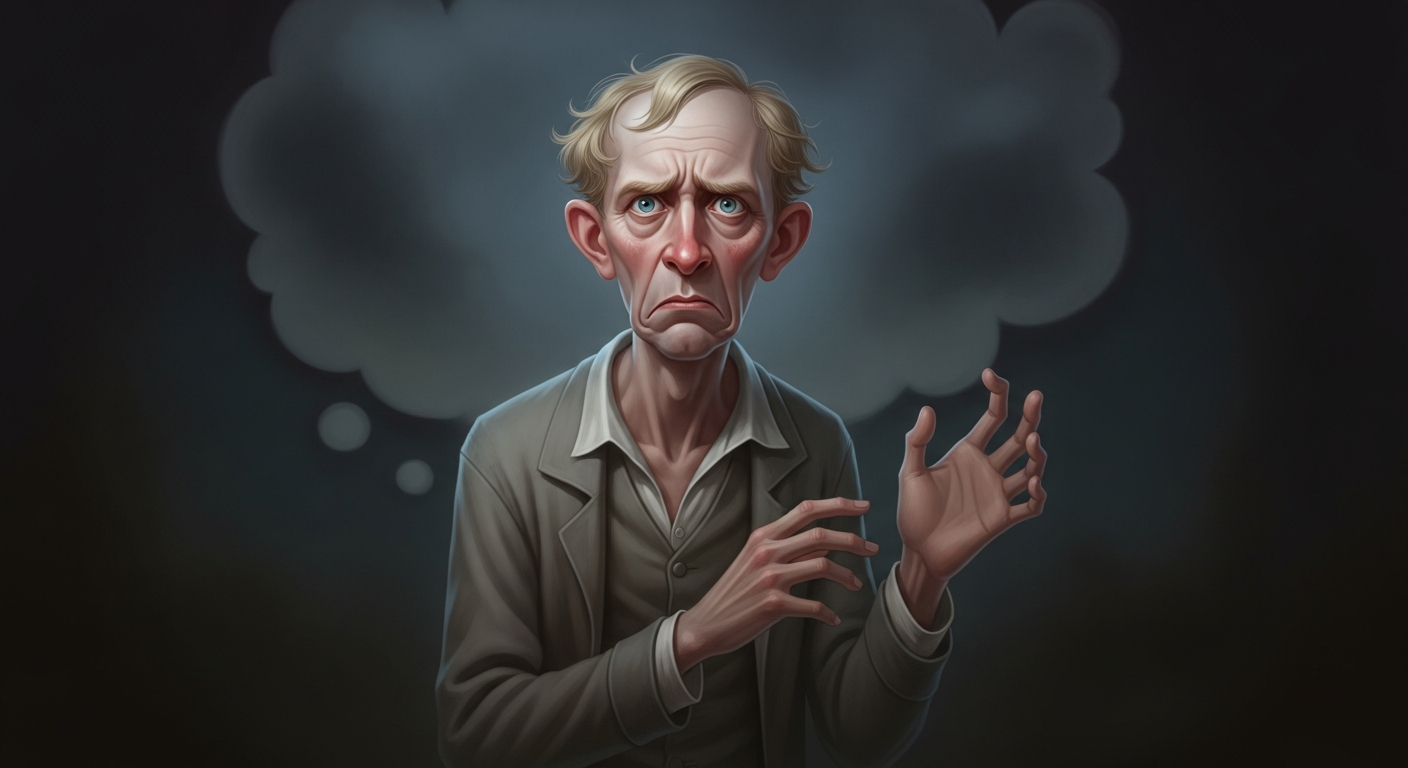
Michael Anthony Palgrave (continued): same English aristocrat of the years after the Great War, still sickly and gaunt, fine-but-worn wool suit. In Minalan's head he is "depressing" and "neurotic" — when he dominates, Minalan drinks, becomes short with Alya, retreats into the workshop. A sickly occultist who can name the thirteen-and-a-half-hours sidereal trance window and argue at length about humanity's emigration from Mars. Thin face, no facial hair, fraying cuffs.
Comments
Share your thoughts on this entry. Sign in with Google, Facebook, X (Twitter), or your Disqus account — we don't manage logins ourselves, and your account stays with the provider.